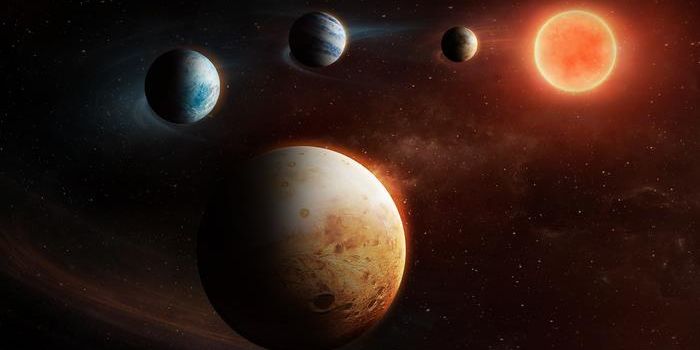
What can small exoplanets blasted by solar radiation teach scientists about planetary evolution? This is what a recent study published in Nature Astronomy hopes to address as a team of scientists investigated the evolution of approximately Earth-sized molten exoplanets slightly larger than Earth. This study has the potential to help scientists better understand the evolutionary pathways of exoplanets with magma oceans and what this could mean for finding Earth-like worlds.
For the study, the researchers used NASA’s James Webb Space Telescope (JWST) to observe L 98-59 d, which is a low-density super-Earth exoplanet located approximately 35 light-years from Earth and has a mass and radius both approximately 1.6 times larger than Earth. Additionally, L 98-59 d completes one orbit around its M-type star in approximately 7.5 days, with M-type stars being smaller and cooler than our Sun. Despite this, M-type stars have been found to exhibit far more solar activity than stars like our Sun, meaning L 98-59 d is constantly blasted with solar radiation, which plays a role in its planetary evolution.
Combining the JWST data with computer models, the goal of the study was to ascertain how exoplanets like L 98-59 d originated and put tighter constraints on their evolutionary pathway. In the end, the researchers found that the L 98-59 d’s mantle is likely a global magma ocean thousands of miles deep consisting of sulfur. Additionally, the researchers ascertained this sulfur magma ocean helps maintain the planet’s hydrogen-rich atmosphere, the latter of which has been hypothesized to be stripped away from the extreme solar activity of its host M-type star.
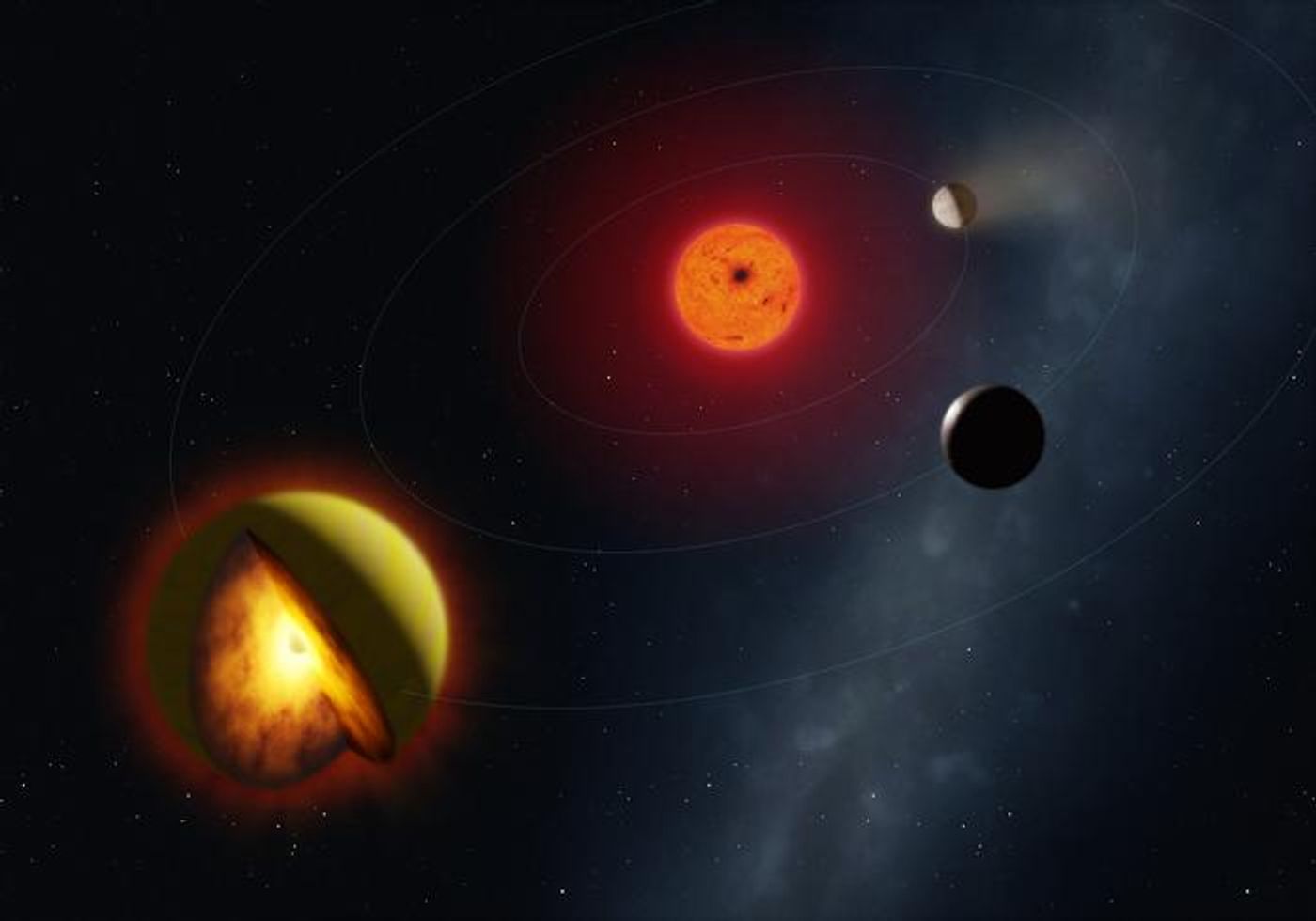
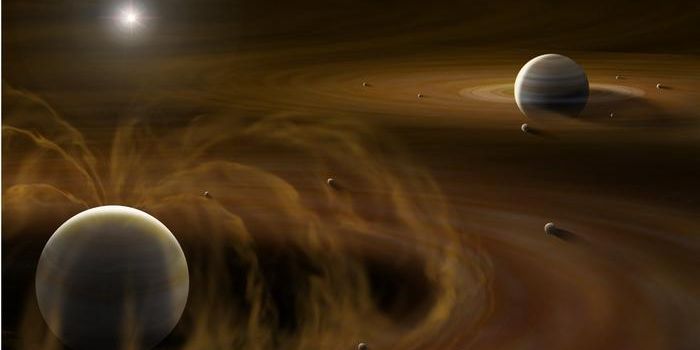
Artist’s illustration of L 98-59 d. (Credit: Mark A. Garlick / markgarlick.com)
“This discovery suggests that the categories astronomers currently use to describe small planets may be too simple,” said Dr. Harrison Nicholls, who is a postdoctoral researcher at Cambridge University and lead author of the study. “While this molten planet is unlikely to support life, it reflects the wide diversity of the worlds which exist beyond the Solar System. We may then ask: what other types of planet are waiting to be uncovered?”
What new insight into molten exoplanets will researchers make in the coming years and decades? Only time will tell, and this is why we science!
As always, keep doing science & keep looking up!
Sources: Nature Astronomy, EurekAlert!