How will astronauts grow food during long-term missions to the Moon? This is what a recent study published in Scientific Reports hopes to address as a team of scientists investigated the prospect of growing food on the Moon. This study has the potential to help scientists, mission planners, engineers, and astronauts develop new methods for growing food on the Moon, which could help advance such techniques when humans go to Mars.
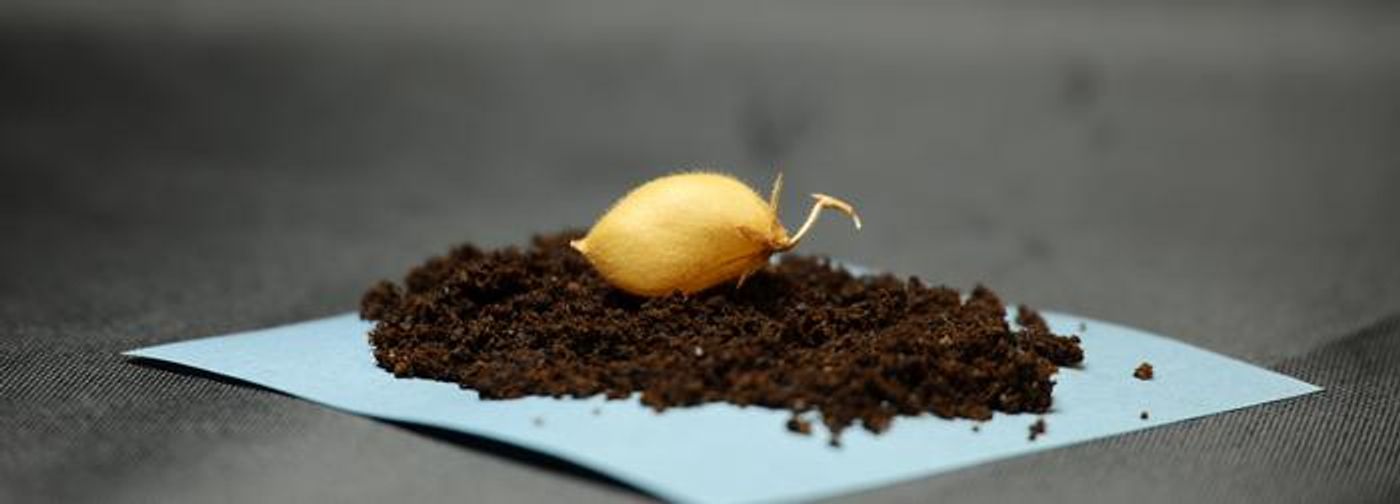
For the study, the researchers grew chickpeas using simulated lunar regolith (often mistakenly called “soil”) and fungi, with the latter being used to test plant stress levels, decrease toxins, and enhance the mixture of regolith simulant and fungi. The team tested a variety of mixtures, including 25 to 100 percent regolith simulant and with and without the fungi. The goal of the study was to ascertain the plausibility of growing food on the Moon under climate-controlled conditions using lunar regolith and Earth-based products. In the end, the researchers found that the most promising mixture was 75 percent regolith simulant with fungi.
Credit: University of Texas Institute for Geophysics
“The research is about understanding the viability of growing crops on the moon,” said Dr. Sara Santos, who is a distinguished postdoctoral fellow at the University of Texas Institute for Geophysics and a co-author on the study. “How do we transform this regolith into soil? What kinds of natural mechanisms can cause this conversion?”
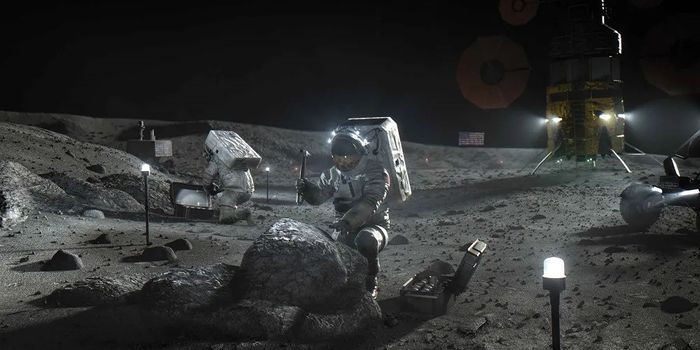
This study comes as NASA plans to return astronauts to the Moon for the first time since Apollo 17 in 1972, though this time to build a long-term base on the lunar surface. If astronauts can use lunar regolith to grow food, this could substantially reduce the cost and logistics of sending Earth soil to the Moon base. This is a concept called in situ resource utilization and is rapidly becoming a practice for sustaining a long-term human presence in space.
What new insight into growing food on the Moon will researchers make in the coming years and decades? Only time will tell, and this is why we science!
As always, keep doing science & keep looking up!
Sources: Scientific Reports, EurekAlert!