Can life transport between planets from impacts? This is what a recent study published in PNAS Nexus hopes to address as a team of scientists investigated how microbes could have come to Earth via asteroid impacts on planets like Mars. This study has the potential to help scientists better understand how life started on Earth and other worlds throughout the cosmos.
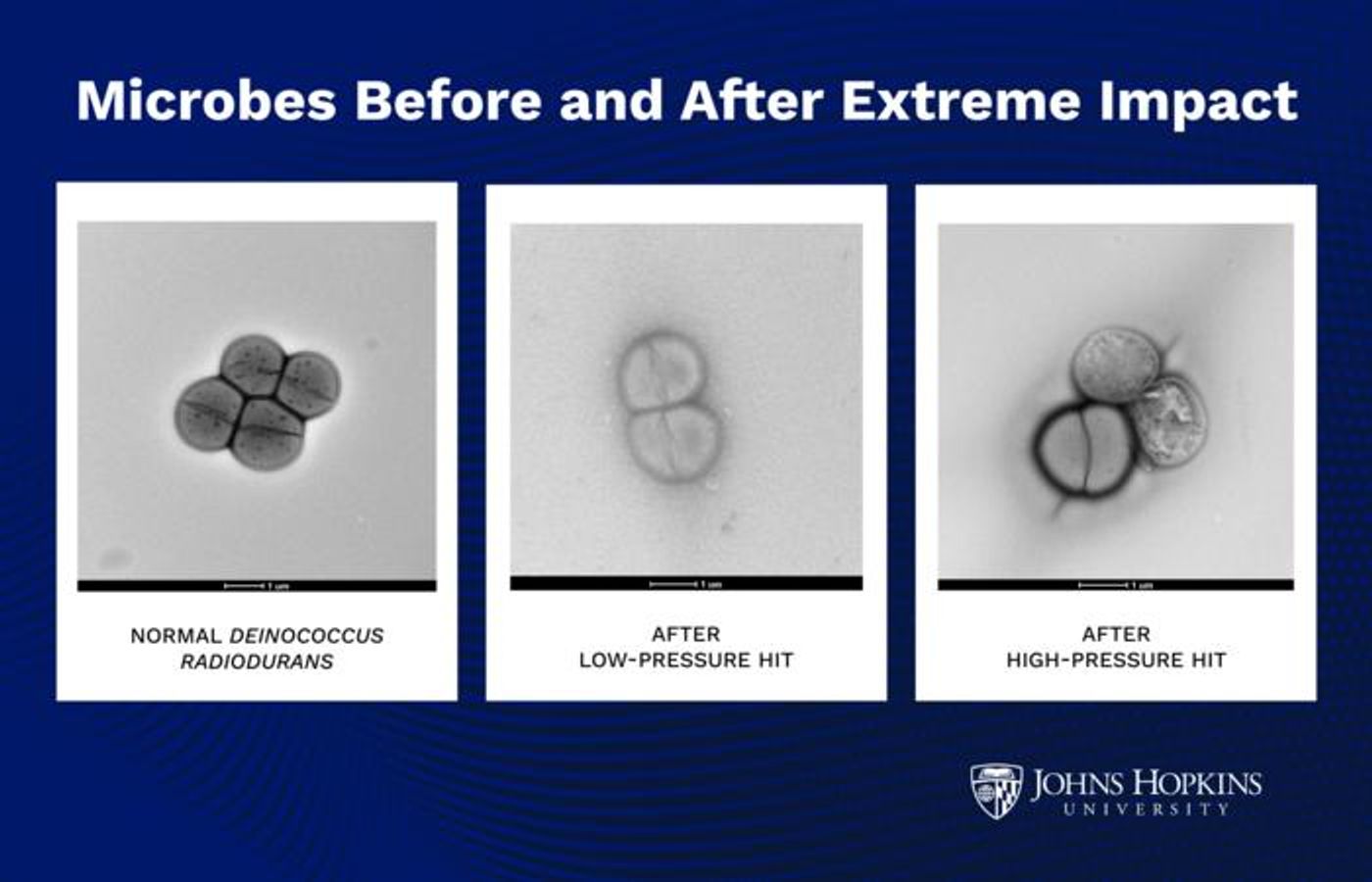
For the study, the researchers conducted a series of laboratory experiments where they subjected microorganisms to space-like conditions, specifically extreme pressure changes. The goal of the study was to ascertain the survival rate and overall response to the extreme environment, which could help determine if microorganisms could survive the extreme vacuum of space during a journey from Mars to Earth. This is because meteorites on Earth have been discovered to have originated from large impacts Mars, flinging chunks of rocks into deep space for millions of years, and crashing on Earth.
In the end, the researchers were surprised to find that the microorganisms in their experiments could survive the harshness of outer space, potentially even being able to travel from planet-to-planet. Potentially, if a large impact occurred on Mars, any microorganisms that existed there could survive the long and harsh journey to Earth.
Credit: Johns Hopkins University
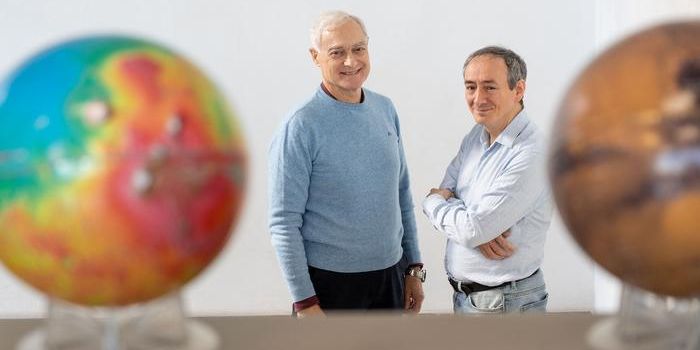
“Life might actually survive being ejected from one planet and moving to another,” said Dr. K.T. Ramesh, who is an Alonzo G. Decker Jr. Professor of Science and Engineering at Johns Hopkins University and a co-author on the study. “This is a really big deal that changes the way you think about the question of how life begins and how life began on Earth.”
The researchers note this research could have enormous implications for planetary protection, how life came to be on Earth, and where to search for life elsewhere in the cosmos.
What new insight into planet-hopping microbes will researchers make in the coming years and decades? Only time will tell, and this is why we science!
As always, keep doing science & keep looking up!
Sources: PNAS Nexus, EurekAlert!