How can scientists use spin as a fossil record for planetary evolution? This is what a recent study accepted for publication in The Astronomical Journal hopes to address as a team of scientists investigated the relationship between planetary spin and brown dwarfs, which are also known as failed stars. This study has the potential to help scientists better understand planet-star interactions and planetary evolution.
For the study, the researchers analyzed data collected from 6 giant exoplanets between 2-7 Jupiter masses and stellar objects between 12-88 Jupiter masses. The researchers combined this data with spin rates of 43 giant planets and 54 free-floating brown dwarfs that were obtained from past studies. The goal of the study was to compare spin rates between exoplanets and brown dwarf stars over a 10-million-year period using computer models. Additionally, the researchers note this could gain greater insight into planetary system formation and evolution. In the end, the researchers found that giant planets spin faster than brown dwarf stars likely due to the latter’s much larger magnetic field causing a slower spin.
“Spin is a fossil record of how a planet formed,” said Dr. Chih-Chun “Dino” Hsu, who is a postdoctoral associate at Northwestern University and lead author of the study. “By measuring how quickly these worlds rotate, we can start to piece together the physical processes that shaped them tens to hundreds of millions of years ago.”
The researchers note there are several directions for future research building off this study, including testing planetary formation models, exploring magnetic field interactions, increasing and expanding the sample size, and exploring how specific environments (isolated versus companion) result in different spin rates.
What new insight into planetary spin and planetary evolution will researchers make in the coming years and decades? Only time will tell, and this is why we science!
As always, keep doing science & keep looking up!
Sources: arXiv, EurekAlert!
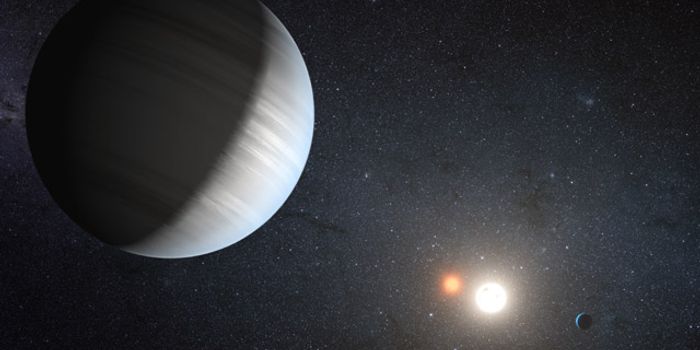
Featured Image: Artist's illustration of a brown dwarf star. (Credit: NASA/JPL-Caltech)