What does it look like two planets collide? This is what a recent study published in The Astrophysical Journal Letters hopes to address as a pair of researchers from the University of Washington investigated two exoplanets that possibly collided. This study has the potential to help astronomers better understand planetary evolution and interactions but also how our Moon formed.
For the study, the researchers analyzed light curve data from a star identified as Gaia-GIC-1 and located approximately 11,000 light-years away and approximately 1.3 times the size of our Sun, designated as an F-type star. A light curve is a dataset meant to denote an exoplanet transit, or when an exoplanet passes in front of its host star, causing a dip in starlight. In the case of this study, the data revealed a rapid change in the light curve data compared to prior observations, indicating an event of some type, along with data consistent with a large debris field. The researchers concluded that two planets collided, causing a massive jump in data and subsequent messy data.
“The star’s light output was nice and flat but starting in 2016 it had these three dips in brightness. And then, right around 2021, it went completely bonkers,” said Anastasios (Andy) Tzanidakis, who is a PhD candidate in astronomy at the University of Washington and lead author of the study. “I can’t emphasize enough that stars like our sun don’t do that. So, when we saw this one, we were like ‘Hello, what’s going on here?’”
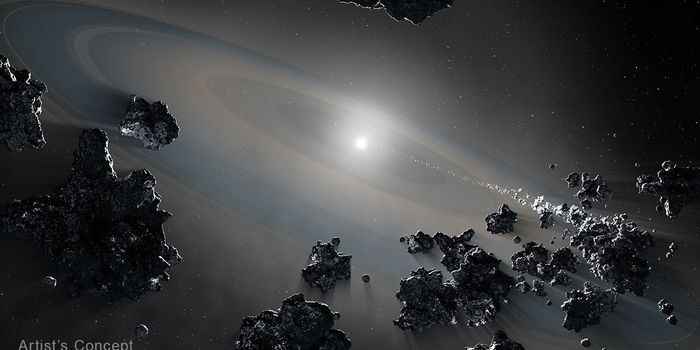
The researchers estimate the size of the debris is approximately the size of Saturn’s moon, Enceladus, meaning the two planets were initially much larger. Not only does this incredible study highlights planetary interactions, but it also helps shed light on how our Moon formed, which researchers have long hypothesized occurred from a planet-sized object colliding with Earth.
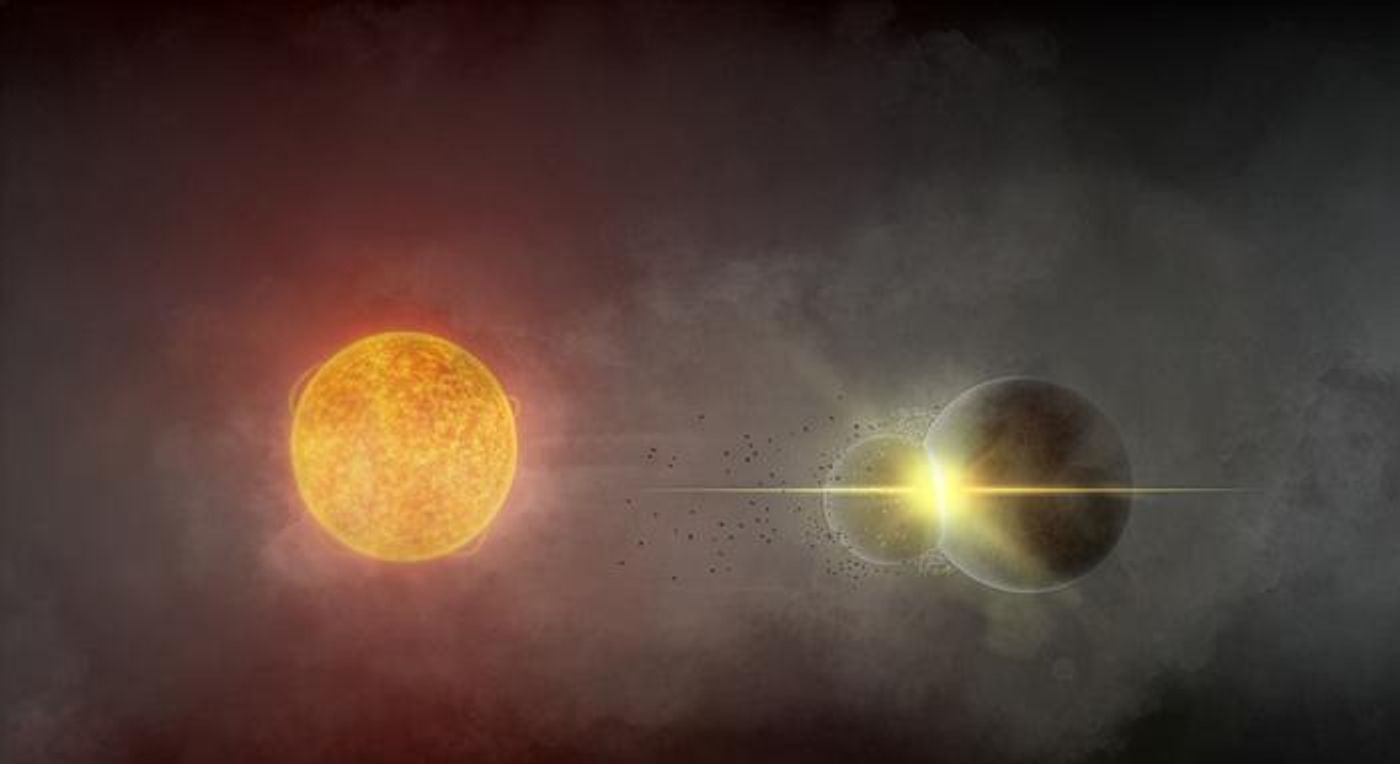
Artist's rendition of the planetary collision that allegedly occurred in this study. (Credit: Andy Tzanidakis)
What new insight into planetary collisions will researchers make in the coming years and decades? Only time will tell, and this is why we science!
As always, keep doing science & keep looking up!
Sources: The Astrophysical Journal Letters, EurekAlert!