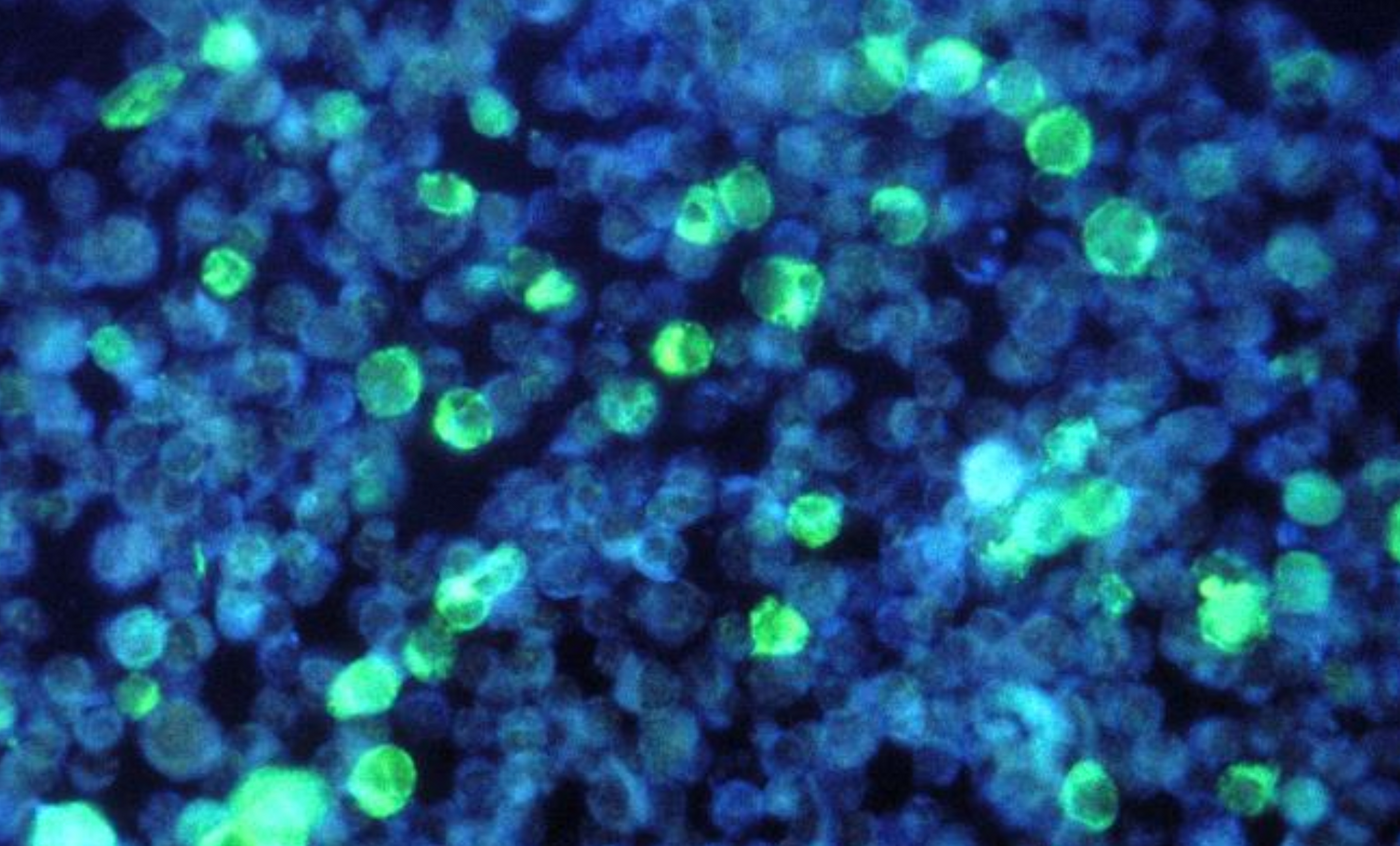
Epstein-Barr virus (EBV) infections are very common–the vast majority of adults are thought to have been infected at some point. But there has also been mounting evidence that EBV is connected to the development of multiple sclerosis (MS), a chronic autoimmune disorder in which the immune system erroneously attacks a kind of neural insulation known as the myelin sheath that surrounds many nerve cells. MS patients often experience lesions in the central nervous system from chronic inflammation. Now scientists have learned more about the connection between MS and EBV. The findings have been reported in Cell.
In most healthy people, the immune system can respond to an EBV infection in part with T cells, which can fight pathogens. Certain types of T cells that are part of a typical immune response to EBV infections can also work against (or cross-react with) a protein known as anoctamin-2 (ANO2) that is found in brain cells. These immune cells can attack this human protein as though it’s part of EBV. Antibodies that react to the EBV protein EBNA1 have previously been associated with MS.
In this work, the investigators analyzed blood samples from MS patients and unaffected volunteers. They identified T cells in MS patients that were reactive to both the EBV protein EBNA1 and the human protein ANO2. This type of cross-reactive T cell was shown to be present at significantly higher levels in MS patients compared to unaffected individuals.
The researchers also used a mouse model to generate antibodies to either ANO2 or EBNA1. There were cross-reactive immune responses. When mice were pre-exposed to ANO2, it worsened MS-like symptoms, and led to brain damage.
"Our results provide mechanistic evidence that immune responses to EBV can directly damage the brain in MS. It is a complex neurological disease, and it may be that the molecular mechanisms vary between patients," said first study author Olivia Thomas, an assistant professor at the Karolinska Institutet.
This study may reveal one reason why an EBV infection can lead to MS in some people but not most others; these cross-reactive T cells do not develop or proliferate to such a high degree in all people.
“The discovery opens up new treatments that target these cross-reactive immune cells. Since several EBV vaccines and antiviral drugs are now being tested in clinical trials, the results may be of great importance for future preventive and therapeutic efforts,” noted co-senior study author Professor Tomas Olsson, also of the Karolinska Institute.
Experienced research scientist and technical expert with authorships on over 30 peer-reviewed publications, traveler to over 70 countries, published photographer and internationally-exhibited painter, volunteer trained in disaster-response, CPR and DV counseling.