Scientists have gained tremendous control over the genome with CRISPR editing systems, which use a guide RNA molecule to direct an enzyme (usually Cas9) to a specific location in the genome, where a cut is made by the Cas9 enzyme at the target genomic location. Those cuts can also be repaired in various ways, such as to repair mutations. But DNA is a large, complex molecule. It can take on a variety of physical forms as it twists, coils, and supercoils. Some areas of the genome can become very difficult to access when DNA is twisted and coiled.
There are also imperfections in the CRISPR system, and sometimes, edits and cuts are made in unintended places. Now scientists are learning more about how DNA twisting and CRISPR can interact. New research reported in Nature has shown that the physical structure of DNA can affect the likelihood that errors in CRISPR will arise.
The unintended, or off-target effects of CRISPR have often been related to the sequence; the guide RNA sequence matches up to another sequence in the genome that is similar, and unintended effects happen there in that undesired location. But recent work has indicated that the form or topology of DNA is also relevant.
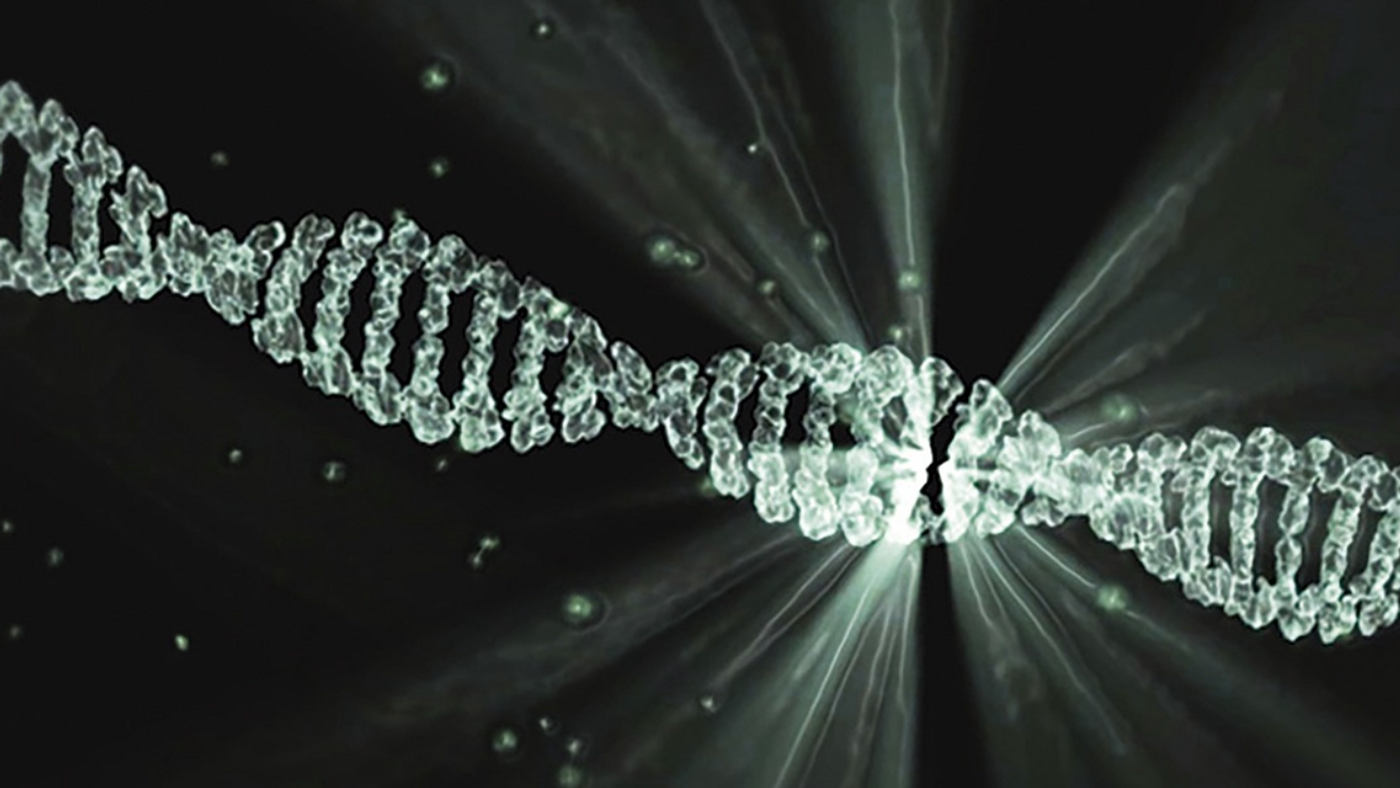
To understand more about this phenomenon, researchers developed a novel research model of tiny, circular bits of DNA or DNA minicircles. They were used to analyze the interactions between CRISPR molecules and DNA that was supercoiled, with cryo-electron microscopy. Along with atomic force microscopy, the researchers saw the helix of the minicircle DNA, and how the action of Cas9 enzymes differed depending on the structure or topology of DNA.
This work showed that when DNA is supercoiled, it is far more susceptible to off-target effects. As Cas9 attaches to supercoiled DNA, the geometry of the enzyme shifts, the cutting portion of the molecule moves so it can make the cut. But DNA that is twisted up may reduce the energy that is needed for Cas9 to attach and cut it; this is what may be encouraging unintended effects.
“The same DNA with the same sequence, in linear form, is not cut by Cas9. It remains completely intact,” said Professor David Rueda, Head of the Single Molecule Imaging group at the MRC Laboratory of Medical Sciences (LMS), among other appointments. “But if you supercoil it, now it’s cut by Cas9. We think this means that many of the off-targets observed in cells appear not only because of the sequence, but also because the DNA is supercoiled.”
Previous work on the interactions between Cas9 and DNA have used linear molecules, so this work could be a far more realistic representation of what is happening in live cells, where DNA is usually coiled or supercoiled so it can fit inside of the nucleus.
The enzyme may be behaving in a far different way than we have assumed based on previous studies using liner DNA models. The work also suggests that Cas9 is far more likely to tolerate mismatches between the guide RNA and the intended genomic target when the helix is twisted.
This study may help make CRISPR more accurate and reliable, however.
“It’s amazing, we all take Cas9 for granted and think we know everything about it. But we still haven’t seen the truly active structure," Rueda noted. "This work takes us one step closer – and it paves the way for developing new, more accurate variants.”
Experienced research scientist and technical expert with authorships on over 30 peer-reviewed publications, traveler to over 70 countries, published photographer and internationally-exhibited painter, volunteer trained in disaster-response, CPR and DV counseling.