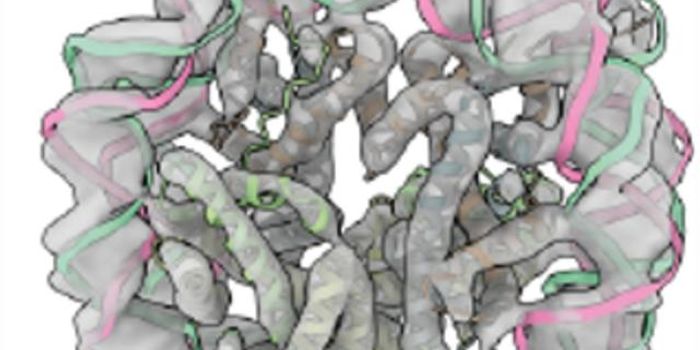
Rett syndrome is a rare neurodevelopment disorder that leads to developmental regression, usually after a period of normal growth, and causes impairments in communication, motor skills, and speech. It is caused by mutations in a gene called MeCP2 (methyl CpG binding protein 2), which lead to a loss of gene function. Since the MECP2 gene regulates several other genes that control neurological processes, a cascade of problems then occur. However, Rett syndrome can be relieved slightly or even reversed in animal models when levels of a mutant MeCP2 protein or the normal MeCP2 protein are increased.
Unfortunately, raising MeCP2 levels is a challenge. Although the loss of MeCP2 leads to disease, an overabundance of it causes another neurological disease known as MECP2 Duplication Syndrome; any treatment using MeCP2 would require very careful application. But scientists may have found a way to strike the right balance, according to new findings reported in Science Translational Medicine.
"We knew from previous studies that the brain normally produces two slightly different versions of the MeCP2 protein, known as E1 and E2," noted corresponding study author Dr. Huda Zoghbi, Distinguished Service Professor at Baylor College of Medicine, director of the Duncan Neurological Research Institute and a Howard Hughes Medical Institute investigator. "These versions come from the same gene, which is processed one way to produce E1 and a different way for E2."
There are four components in the production of MeCP2 proteins: e1, e2, e3 and e4. When an MeCP2-E1 protein is made, only e1, e3, and e4 are used. For MeCP2-E2, all of the components are brought together, so e2 is only part of MeCP-E2. In healthy brains, both MeCP-E1 and MeCP-E2 are made, but MeCP-E1 is more abundant.
"Only mutations that disrupt E1 protein cause the condition," said first study author Harini Tirumala, a graduate student in the Zoghbi lab.
The investigators wanted to know if encouraging brain cells to disregard e2 would help improve Rett symotoms. In a mouse model and in cell lines made from Rett patient samples, an elimination of e2 from the Mecp2 in mice resulted in a significant increase in functional MeCP2 protein.
"Importantly, depending on the severity of the mutation, these cells recovered part or all of their normal structure, their normal electrical activity and their ability to regulate the levels of other genes," Tirumala said.
The researchers also tested a molecule known as a morpholino to block access to the e2 portion. It was also able to increase MeCP2 levels.
"It was exciting to see that our morpholinos significantly increased MeCP2 protein in mice," Tirumala said.
"Our work lays the foundation and provides preclinical evidence for a therapeutic approach for Rett syndrome that increases MeCP2 and confers functional improvement," added Zoghbi. "Although morpholinos themselves are not an option because of their toxicity, similar strategies like antisense oligonucleotide therapies already used in other conditions could potentially be developed for Rett syndrome."
Experienced research scientist and technical expert with authorships on over 30 peer-reviewed publications, traveler to over 70 countries, published photographer and internationally-exhibited painter, volunteer trained in disaster-response, CPR and DV counseling.